

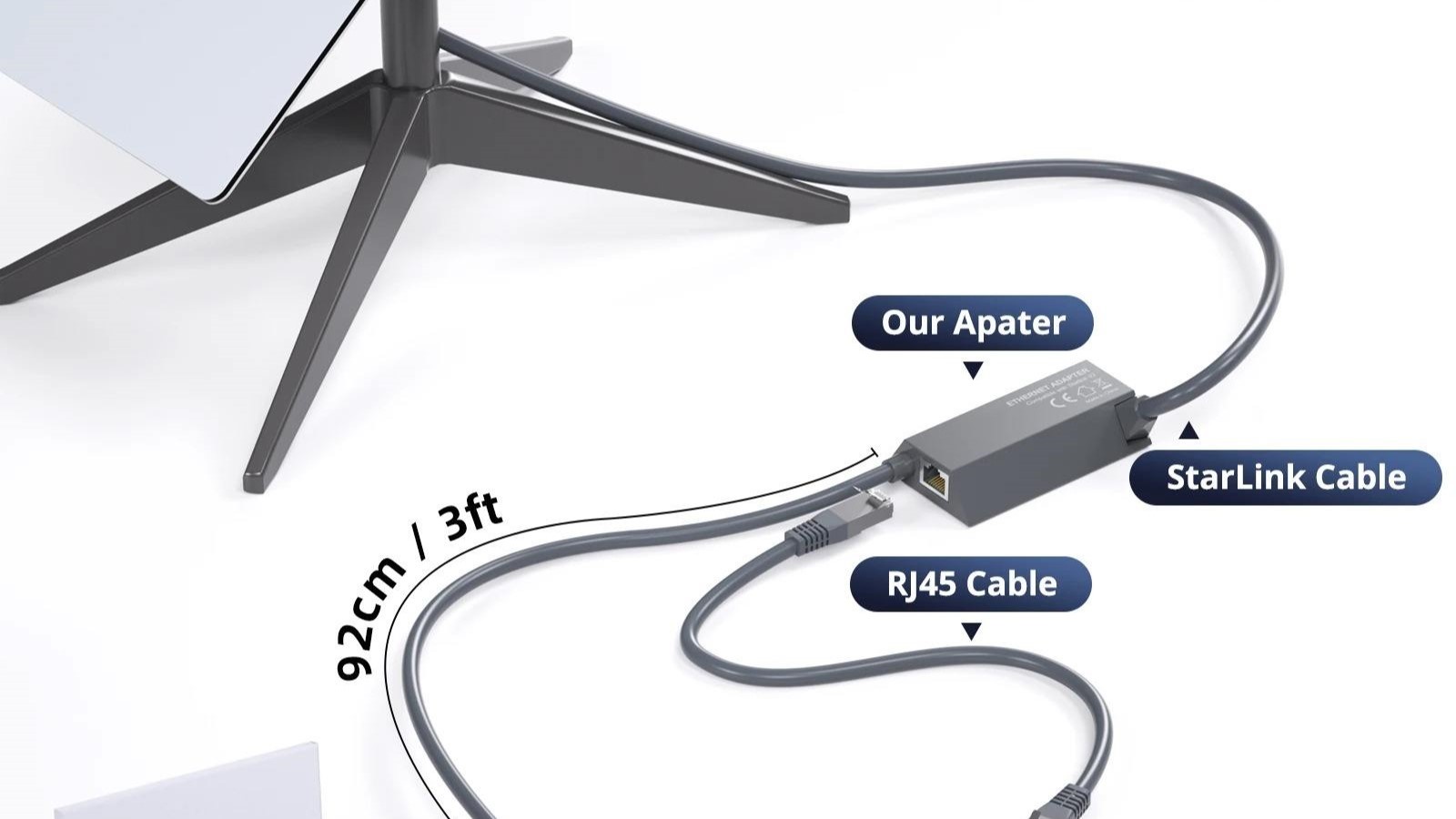
Smooth connectivity shapes how people live and work today. Users demand stable links for remote work, competitive gaming, high-resolution streaming, and distributed smart-home systems. Although Starlink has already shifted the communication landscape with its low-earth-orbit satellite network, many users still struggle to keep every device stable under peak load. The challenge grows when multiple users share one terminal or when wireless interference disrupts critical tasks. Because of these situations, a Starlink wired network converter becomes a practical upgrade for users who want predictable performance. This converter offers a structural improvement rather than a simple hardware accessory, and its real impact extends far beyond adding a basic Ethernet port.
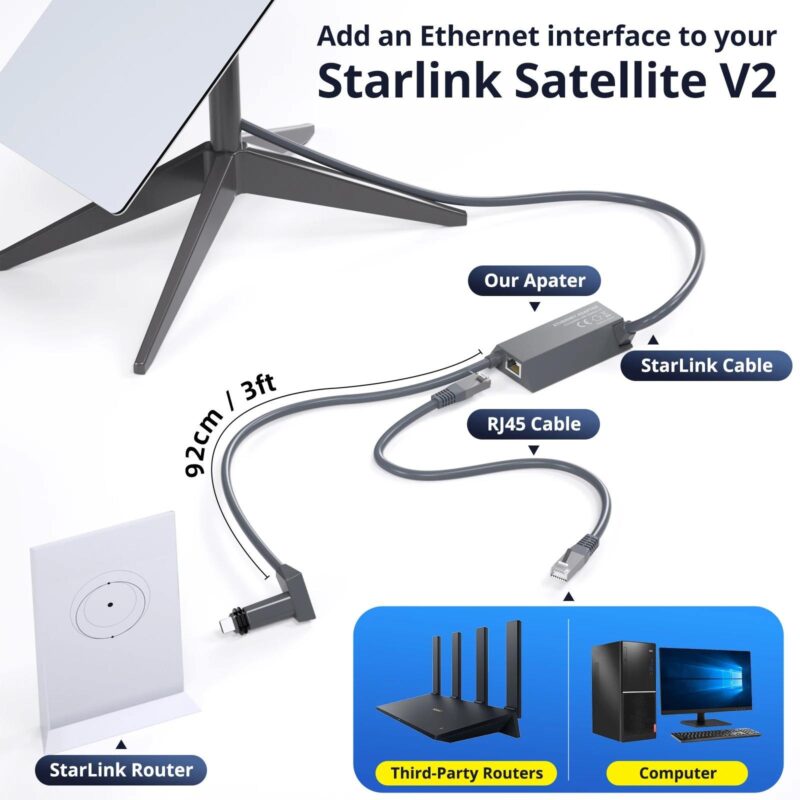
A Starlink wired network converter strengthens the network by building a direct path between the Starlink terminal and user devices. This direct path removes the common bottlenecks of wireless transmission. Although Wi-Fi brings convenience, its performance varies with distance, obstacles, interference, and connected device density. However, a wired connection stays steady even in noisy environments. Users who want consistent speed often move toward wired options, and this converter unlocks that possibility for the Starlink ecosystem. Through it, homes and small offices can upgrade their network stability without replacing the entire Starlink kit.
Wired Connectivity as a Structural Upgrade
A Starlink wired network converter creates physical stability by eliminating the invisible factors that cause signal drift. Wi-Fi waves weaken when they pass walls, metal surfaces, or appliances. They also suffer from congestion when too many devices compete for the same frequency band. Because wireless noise cannot be predicted, many users experience sudden latency spikes. These spikes interrupt video calls, break game sessions, and distort streaming quality. Although the router attempts to manage these moments, the network still fluctuates because the wireless medium changes every second.
A wired converter resolves these fluctuations with one continuous electrical path. It moves the link away from unstable airwaves and into a shielded cable environment. As a result, the connection keeps its speed across the entire transmission path. This reliability becomes essential in high-stress scenarios, such as remote conferences or cloud editing sessions. The converter supports Starlink’s bandwidth without losing data to interference, therefore strengthening the entire local network.
Starlink accessories evolve rapidly, but the wired converter fills one of the most important gaps. Many users want consistency more than peak speed, and this converter focuses on that priority. It creates a stable Ethernet output that feeds routers, switches, personal computers, gaming consoles, and smart-home hubs. This simple change shifts the local network behavior because wired segments reduce load on wireless channels. Even wireless users benefit indirectly when the converter removes heavy devices from the Wi-Fi spectrum.
Why Latency Improves When Starlink Goes Wired
Latency becomes the core concern for anyone who wants to reduce delays. Although Starlink’s satellite path already outperforms traditional satellite systems, local delivery still determines end-user experience. Users often confuse bandwidth with latency, yet these two elements behave differently. Bandwidth affects capacity, but latency affects response. A high-bandwidth network may still respond slowly if Wi-Fi interference forces devices to retransmit packets. This retransmission occurs silently and increases delay without warning. In high-stress tasks, that delay becomes noticeable.
A Starlink wired network converter reduces latency by removing this retransmission loop. The Ethernet link carries packets with precise timing, so devices stop competing for wireless airtime. Every packet travels through a predictable circuit, and the local network stops adjusting for environmental noise. Even modest improvements feel significant in real use. A video call stops freezing. A sensitive application stops buffering. A smart camera stops dropping frames. Although these changes appear small, they shape user confidence and improve productivity.
When users combine the converter with a modern router, the system gains more advantages. Routers use Quality of Service features to assign priority to critical devices. Although Wi-Fi can also use QoS, the effect weakens under congestion. A wired link, however, strengthens each rule because timing stays consistent. As a result, latency-sensitive devices receive clean signals. This transformation illustrates how a converter influences every layer of the network, not only the physical layer.
Network Stability for Multi-Device Environments
Modern homes and small offices rely on many connected devices. Phones, laptops, smart TVs, security systems, and IoT sensors compete for the same Wi-Fi space. This density increases yearly as more appliances integrate smart functions. Because of this change, the network load does not stay steady. Peak periods strain the wireless spectrum, and performance drops. Users blame the ISP, but the issue often comes from local congestion rather than the external link.
A Starlink wired network converter helps redistribute this load. It moves key devices into a wired system, which protects them from wireless noise. At the same time, it frees Wi-Fi for mobile devices that truly need wireless coverage. This balance improves overall performance. Users notice smoother browsing and faster loading because the network no longer fights with unnecessary interference.
The converter also supports small offices that rely on fast internal communication. File servers, collaborative tools, and shared printers require stable links. When these essentials run through wired routes, the system handles peaks without collapse. As more professionals adopt flexible work models, the need for dependable communication grows. The converter ensures that the Starlink installation can support these demands even in hybrid setups.
How a Wired Converter Strengthens Smart-Home Performance
Smart-home systems rely on constant communication. When sensors or hubs disconnect, automation stops working. Although Wi-Fi supports many smart devices, it remains vulnerable to interference. Smart lights may respond slowly. Cameras may lose frames. Voice assistants may misinterpret commands when the network delays responses. These disruptions reduce the value of the entire smart-home experience.
A Starlink wired network converter supports the smart-home core by creating an anchor point. Users can connect their main hub directly to the wired port. With this anchor, the commands move through the network with minimal delay. Other routers and switches extend this stability to every room. Even if individual devices remain wireless, the backbone stays strong.
As smart-home systems grow, this backbone becomes essential. Homes that use multiple cameras, AI hubs, and high-bandwidth appliances need structured networks. The converter enables this structure even when the original Starlink kit does not offer built-in Ethernet. Because of this, users can scale their automation plans without worrying about wireless overload.
Enhancing Streaming and High-Resolution Content
Streaming requires a consistent data flow. Although high bandwidth supports large files, consistency prevents buffering. Even minor disruptions break immersion when watching high-resolution content. Gamers also demand this consistency because modern cloud platforms rely on real-time rendering. A Starlink wired network converter strengthens these experiences by removing the environmental variables that ruin stability.
When video streams travel through Ethernet, they remain free from packet collisions. The router can deliver frames in a predictable line. The converter reinforces this behavior because it feeds the router with stable Starlink data. Once the path becomes predictable, streaming platforms deliver content more efficiently. Users notice fewer pauses and smoother playback.
Even multi-device households benefit. One device streaming over wired Ethernet keeps wireless channels open for other family members. This balance keeps evening peak hours smooth and prevents Wi-Fi saturation. As more platforms support 4K and 8K video, this stability becomes even more important.
Why Businesses Rely on Wired Starlink Solutions
Starlink expands connectivity in rural and remote locations. Businesses in these areas often lack high-quality wired Internet. However, they still need stable connections to run cloud tools, payment terminals, monitoring systems, and security networks. A basic wireless setup may not support these workflows because interference damages essential processes.
A Starlink wired network converter transforms the installation into a more reliable system. It gives businesses an Ethernet link that feeds structured cabling networks. Shops can connect POS systems. Construction sites can power monitoring hubs. Remote offices can run VoIP platforms with fewer interruptions. Although wireless options remain available, stability becomes the priority when operations rely on timely communication.
Many industries use data-heavy applications, such as uploading site images or distributing large project files. A wired path reduces local loss, so the Starlink bandwidth performs at full capacity. This performance creates a strong foundation for modern remote operations.
 Building a Hybrid Network with Wired Strength
Users do not need to eliminate wireless coverage to enjoy stability. A hybrid model combines wired reliability with wireless mobility. The Starlink wired network converter acts as the core of this hybrid system. It plugs into the Starlink terminal and feeds a high-quality router. The router manages both wired and wireless zones. Because the upstream connection is stable, both zones perform better.
This hybrid model supports multiple building layouts. Large homes can use Ethernet for fixed devices and mesh Wi-Fi for mobile devices. Small offices can use Ethernet for workstations and Wi-Fi for visitors. Because the converter stabilizes the Starlink input, each zone maintains stronger performance. This approach extends the network lifespan because users can upgrade routers without replacing the converter.
The Real Value Behind the Converter
The Starlink wired network converter offers more than a port. It reshapes how the entire network behaves. It protects performance from environmental noise. It supports high-demand tasks. It enhances latency-sensitive applications. It strengthens hybrid systems. It brings structure to growing smart homes. Because of these benefits, the converter becomes a long-term upgrade rather than a temporary accessory.
Users who invest in stable connectivity gain more control over their digital environment. They reduce frustration caused by unpredictable wireless behavior. They improve productivity with consistent response times. They upgrade multimedia experiences. They prepare their systems for future devices that require stable bandwidth. Because communication will continue to grow in complexity, investing in a wired foundation today prepares users for tomorrow’s challenges.
Conclusion
A Starlink wired network converter changes the network from the inside out. It strengthens stability. It reduces latency. It supports both home and business environments. Although the device seems simple, its effect becomes profound when users demand predictable performance. As modern digital life evolves, this converter will continue to play a central role. It keeps Starlink installations stable under heavy load, and it ensures that users experience the full potential of satellite connectivity.