

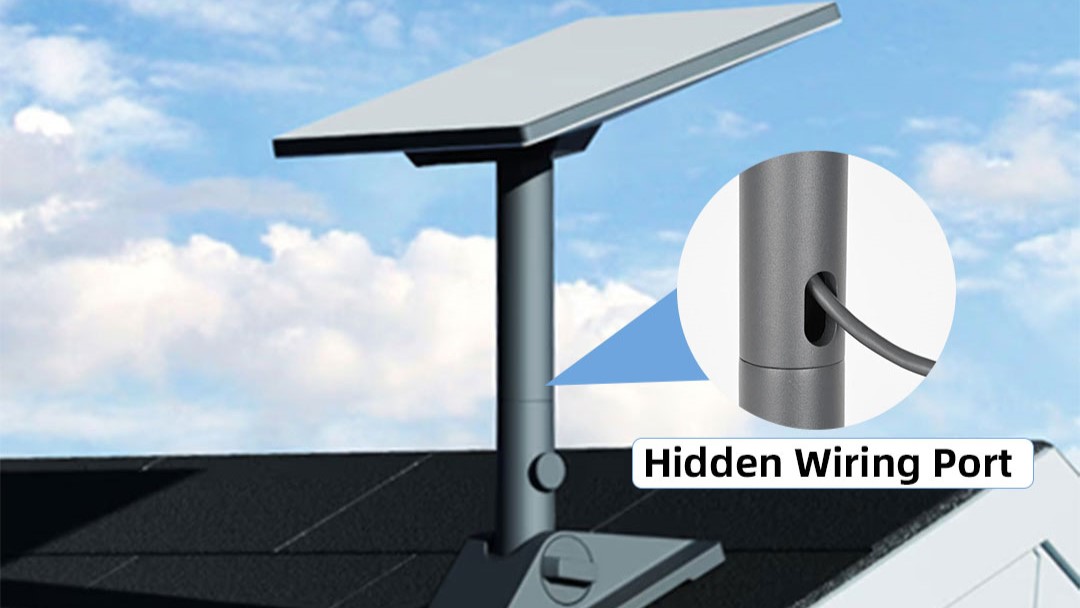
In the landscape of satellite connectivity, the Starlink Mini represents a leap in portable, high-speed internet. However, as users deploy these devices in high-rise apartments, coastal rooftops, and urban wind corridors, they face a silent adversary: Atmospheric Turbulence. In these environments, wind speeds often accelerate into “canyon effects,” reaching Force 8 on the Beaufort scale—gales capable of shaking standard hardware and disrupting critical data links.
To maintain a persistent handshake with Low Earth Orbit (LEO) satellites, a mount must be more than a bracket; it must function as a precision-engineered stabilizer. By combining die-cast aluminum construction with an omnidirectional adjustment system, the modern Starlink Mini mounts serve as a professional-grade solution to the challenges of wind resistance and signal integrity.
1. Fluid Dynamics: Reducing the Drag Profile
High-rise buildings and coastal cliffs act as natural funnels, creating high-velocity wind streams. For a satellite receiver, even a small surface area becomes a sail when hit by a 70 km/h gust.
The Low-Drag Advantage
The Starlink Mini mounting kit utilizes a streamlined die-cast aluminum profile. Unlike bulky, improvised solutions, this mount minimizes its frontal surface area. The sleek geometry of the 360° rotating mast allows wind to flow around the structure with minimal turbulence. By reducing the Drag Coefficient ($C_d$), the mount lowers the lateral force exerted on the roof attachment points, preventing structural fatigue over time.
Omnidirectional Alignment
Aerodynamic stress is often a result of poor orientation. With a 180° swivel pivot and a 360° rotating mast, the mount allows for “Wind-Smart” positioning. Users can adjust the mast to ensure the dish faces the sky at the optimal angle while the support structure maintains the most aerodynamic posture relative to prevailing local winds.
2. Structural Integrity: The Die-Cast Aluminum Shield
In extreme environments—ranging from salt-heavy coastal air to intense urban heat—the material composition determines the lifespan of the connection.
Heavy-Duty Resilience
Crafted from heavy-duty die-cast aluminum, the Starlink Mini mounts provide a superior strength-to-weight ratio. This material choice is critical for two reasons:
-
Vibration Damping: Aluminum possesses natural damping properties that help absorb high-frequency micro-vibrations caused by whistling winds.
-
Weather Resistance: Unlike standard steel, which oxidizes and weakens in rain or sleet, die-cast aluminum is inherently rust-resistant. It maintains its structural “stiffness” through snow, hail, and intense UV exposure, ensuring that the pivot points do not loosen due to material degradation.
3. Precision Stability: The Lock-Down Mechanism
A satellite dish tracking a satellite moving at 27,000 km/h cannot afford even a millimeter of “jitter.” Physical movement at the base of the mount translates into significant signal degradation.
Triple-Point Locking
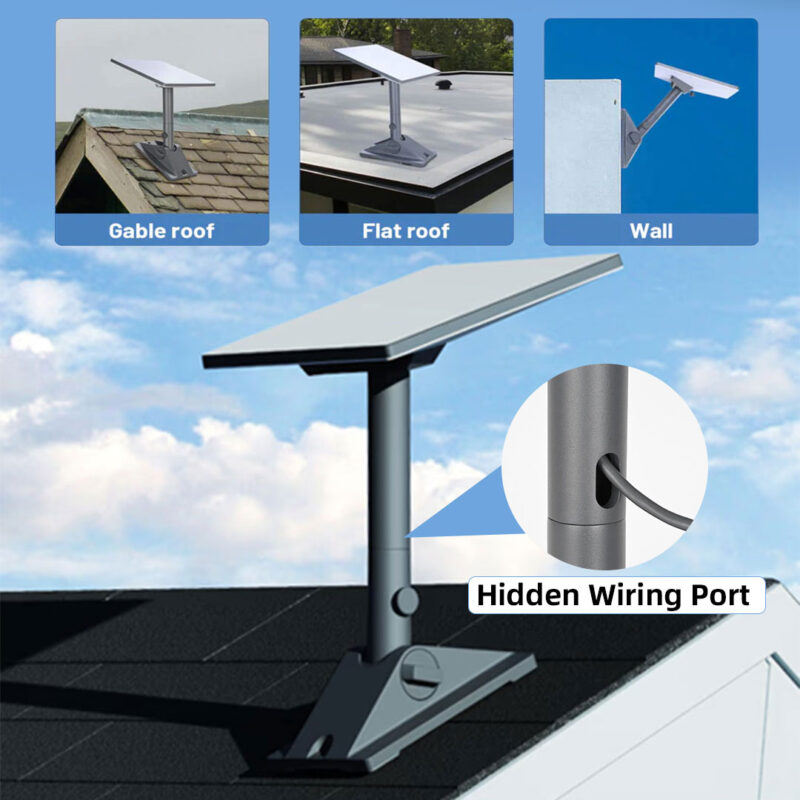
Stability in this kit is achieved through a Triple-Point Locking System. Tightening knobs are strategically placed on:
-
The Swivel Pivot: Secures the vertical tilt.
-
The Rotating Mast: Locks the horizontal orientation.
-
The Mast Adapter: Ensures the Starlink Mini dish clicks into place with zero mechanical play.
This redundancy ensures that once the “strongest sky signal” is found, the mount remains a “stable sentinel.” Even during a Force 8 gale, the high-torque tightening knobs prevent the mast from shifting, maintaining the precise boresight alignment required for high-speed data transfer.
4. User-Centric Engineering: Tool-Free Calibration
In a high-wind environment, the ability to make rapid, secure adjustments is vital. A mount that requires complex tools during a storm is a liability.
The Large Pivot Knob Design
The inclusion of a large, ergonomic pivot knob allows for tool-free manual adjustments. This user-friendly feature enables the operator to fine-tune the 180° tilt instantly. In shifting weather conditions or during initial setup, a simple twist of the wrist secures the preferred angle. This design prioritizes the “Active Health Management” of the signal—allowing the user to respond to environmental changes without specialized equipment.
5. Seamless Integration: The Wood Roof Mounting Logic
For residential and commercial buildings with wood-slat or shingle roofs, the installation process must be non-destructive yet incredibly firm.
Effortless Setup
The mounting kit simplifies the transition from unboxing to connectivity:
-
ath-to-node=”38,0,0″>a-index-in-node=”0″>Secure Base Attachment: The wide-footprint base plate distributes the physical load across the wood roofing, reducing pressure on any single point.
-
Quick-Click Interface: The dish clicks directly into the mast adapter, eliminating the need for complex brackets.
-
Once the dish is mounted, the 360° rotation and 180° tilt allow the user to bypass physical obstructions (like chimneys or branches) to lock in a clear line of sight.
6. Conclusion: Infrastructure for the Modern Sky
The urban wind corridor is an unforgiving laboratory for hardware. To protect the sophisticated electronics of the Starlink Mini, the mounting solution must be equally advanced. By combining fluid adjustability with heavy-duty aluminum strength, these Starlink Mini mounts convert fragile rooftop setups into secure connectivity systems. Across coastal winds or urban summer heat, 180°/360° adjustment and triple-point stability keep connections consistently firm and reliable.