

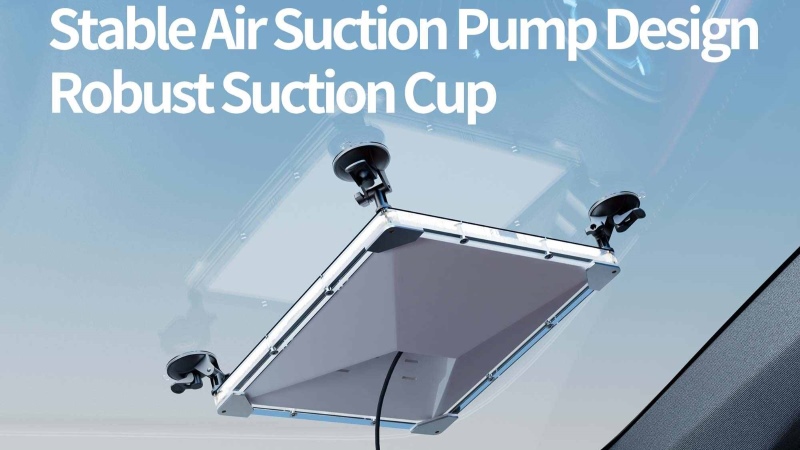
Securing high-tech gear to a moving vehicle requires absolute trust in your mounting hardware. Many users worry if a suction mount can handle high speeds or rough roads. However, the physics of “negative vacuum pressure” provides an incredibly strong and reliable bond. Specifically, a professional Starlink Mini suction holder utilizes atmospheric force to stay locked in place. This guide explains the science of suction and how to maximize its safety margin. We help you understand the limits of vacuum technology for your mobile internet setup.
1. The Physics of the Grip: Atmospheric Power
Suction cups do not actually “pull” on the glass surface. Instead, the weight of the air around us pushes the mount down.
Creating the Vacuum Seal
When you press a Starlink Mini suction holder, you push the internal air out. Consequently, a low-pressure zone or “vacuum” forms inside the cup. Furthermore, the outside air pressure exerts approximately 10kg per square centimeter of force. This massive pressure keeps the holder firmly attached to the vehicle. Therefore, the strength of the bond depends on maintaining this airtight seal.
2. Why Smooth Glass is the Perfect Surface
Surface texture determines how long a vacuum can last before leaking.
The Battle Against Micro-Pores
Automotive glass is an ideal substrate because it lacks microscopic pores. Consequently, there are no tiny tunnels for air to seep back into the cup. Furthermore, the smooth surface allows the rubber lip to create a perfect mechanical gasket. This prevents the gradual loss of negative pressure during long road trips. Therefore, you should always clean the glass thoroughly before every installation.
3. Managing the “Safety Margin”: Environmental Factors
External conditions can slowly degrade the performance of even the best mounts.
Temperature and Air Expansion
Extreme heat from the sun can cause the tiny amount of remaining air to expand. Consequently, this expansion reduces the vacuum intensity inside the Starlink Mini suction holder. Furthermore, freezing temperatures can make the rubber lip stiff and less flexible. This stiffness might allow air to bypass the seal on bumpy roads. Therefore, professional users check the tightness of their mounts during every fuel stop.
The Impact of UV Aging
Constant exposure to ultraviolet rays slowly breaks down the polymers in suction cups. Consequently, old rubber may develop tiny cracks that lead to slow air leaks. Furthermore, a dry or brittle cup cannot conform to the subtle curves of the windshield. This reduces the overall safety margin of your equipment mounting system. Therefore, we suggest replacing your suction hardware if the rubber feels hard or inelastic.
4. Pro-Tips for Maximum Suction Longevity
-
Wet the Rim: A tiny drop of moisture creates a better airtight barrier.
-
Avoid Defroster Lines: Small ridges on the glass can allow air to enter.
-
Periodic Resetting: Occasionally, pull the lever to exhaust any accumulated air.
Consequently, you will ensure your Starlink Mini suction holder remains rock-solid for hours. Furthermore, regular inspections prevent accidental drops of your expensive satellite hardware. Therefore, proactive maintenance is the key to a worry-free mobile internet experience.
Conclusion: Trusting the Science of the Seal
Vacuum technology provides a powerful, non-invasive method for mounting your mobile gear.
Stop worrying about your equipment falling off during your next off-road adventure. Instead, embrace the proven physics of atmospheric pressure and vacuum seals. Consequently, you will enjoy a stable connection, regardless of where your journey takes you. Experience the reliability of a professionally engineered mounting solution today. Your Starlink Mini deserves a grip that never lets go.