

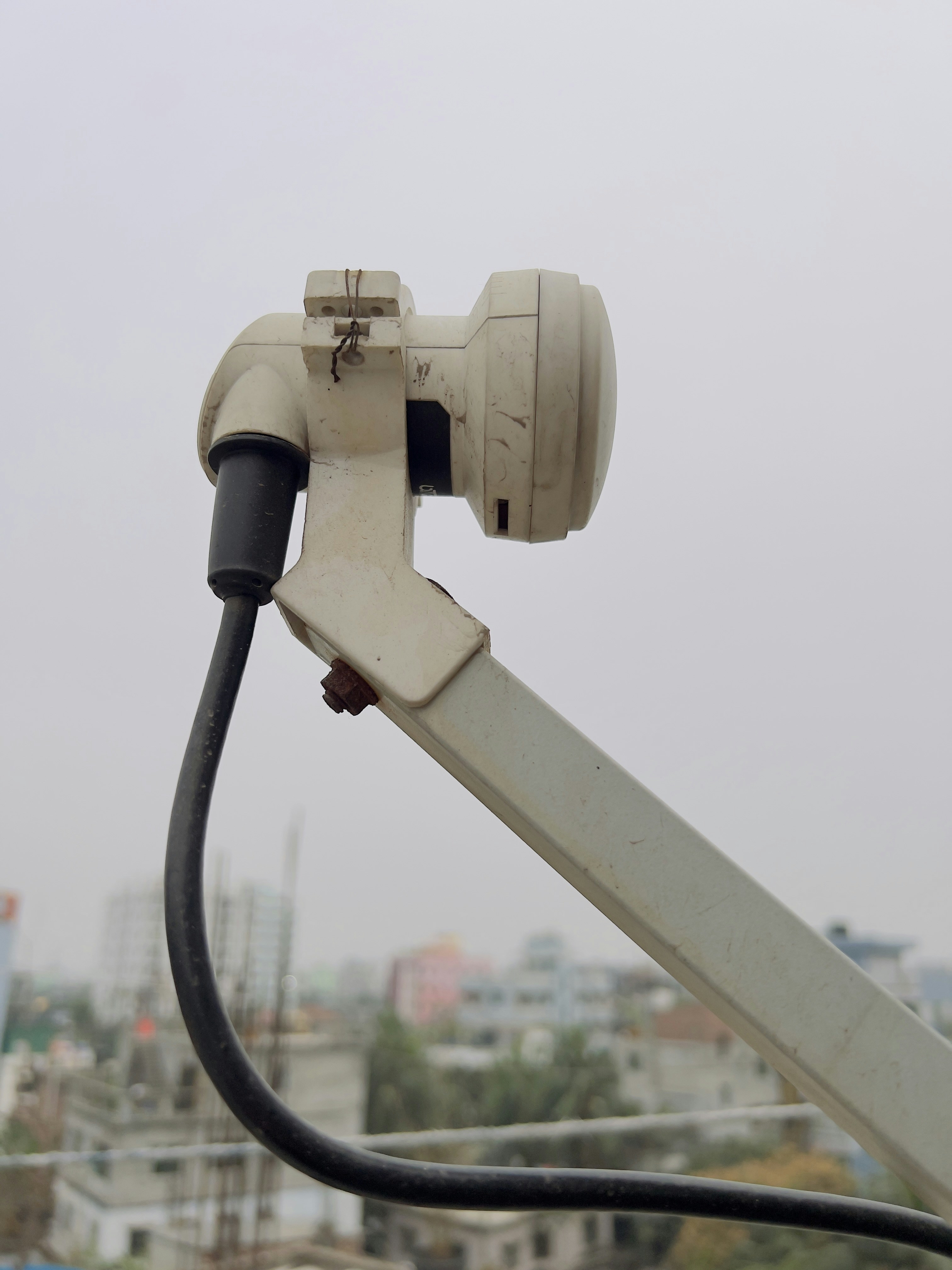
When deploying satellite internet systems across expansive properties, rural homesteads, or mobile setups, installers and end-users encounter a primary spatial bottleneck: “How much further can the antenna be repositioned using a 150-foot extension cable compared to standard factory cables, and what is the true return on investment in signal quality?”
Standard satellite antenna cables typically measure between 50 to 75 feet (15 to 23 meters), which severely restricts dish placement when tall trees, chimneys, adjacent structures, or steep rooflines obstruct the line of sight. Extending the separation distance between the dish and router up to 150 feet (45.7 meters) allows operators to bypass spatial obstructions entirely while keeping the Wi-Fi router centrally positioned inside the primary living or working space.
This technical guide evaluates signal mechanics, installation versatility, spatial ROI, and physical engineering standards when upgrading to a 150ft Starlink Gen2 replacement cable.
1. Overcoming Spatial Obstructions with a Longer Cable
Satellite internet terminals require a clear view of the sky to maintain stable connections with orbiting satellites. However, standard factory cables often limit where users can place the dish.
As a result, users may need to install the antenna close to the router. This can create signal obstructions from trees, buildings, roofs, or other structures.
A 150ft Starlink Gen2 extension cable provides greater installation flexibility. It allows the satellite dish to move farther away from the router and into a clearer outdoor location. Meanwhile, the router can remain inside the building where Wi-Fi coverage is needed most.
Standard Cable vs. 150ft Starlink Extension Cable
| Parameter | Standard Factory Cable | Nxcsxvs 150ft Extension Cable |
|---|---|---|
| Separation Distance | 15–23 meters (50–75 ft) | Up to 45.7 meters (150 ft) |
| Obstruction Bypass | Limited placement flexibility | Better placement around trees and structures |
| Conductor Type | Standard multi-strand conductor | 24AWG single-core solid copper |
| Data Throughput | Standard system performance | Up to 1200Mbps transmission capability |
| Weather Protection | Standard exterior PVC | Weather-, moisture-, and abrasion-resistant |
| Installation Method | Factory-standard installation | Plug-and-play installation |
Real-World Performance and Signal Integrity
Long cable runs often raise concerns about signal attenuation and voltage drop. However, a properly engineered 150ft Starlink Gen2 replacement cable can maintain stable power and data transmission over extended distances.
High-quality conductors help reduce transmission losses across long cable runs. Therefore, users can position the dish in a location with better sky visibility without unnecessarily moving the router.
This configuration can support residential, commercial, agricultural, and temporary outdoor applications where installation distance is a major concern.
Note: Actual network speed depends on the Starlink service plan, network conditions, equipment generation, installation environment, and cable system compatibility.
2. Engineering Features of the Nxcsxvs 150ft Starlink Gen2 Extension Cable
The Nxcsxvs 150ft Starlink Gen2 replacement cable is designed for residential installations, commercial deployments, OEM projects, and B2B distribution.
Its extended length and durable construction help solve common installation challenges while providing greater flexibility for satellite internet system deployment.
1. 24AWG Single-Core Solid Copper Conductor
The cable uses high-purity 24AWG single-core solid copper conductors. This conductor design supports stable power delivery and high-speed data transmission.
With a transmission capability of up to 1200Mbps, the cable can support demanding applications such as 4K streaming, online gaming, remote work, and business connectivity.
2. Plug-and-Play Compatibility for Starlink Gen2
The cable is designed for rectangular Starlink Gen2 satellite systems and compatible router connections.
Its precision-molded connectors support direct installation without additional interface converters or specialized installation tools.
Therefore, installers can reduce installation complexity and complete cable replacement or extension work more efficiently.
3. Weather-Resistant and Abrasion-Resistant Construction
Outdoor satellite installations expose cables to sunlight, moisture, temperature changes, and mechanical abrasion.
To address these conditions, the cable features a rugged outer jacket with weather, moisture, UV, and abrasion resistance.
In addition, its flexible construction supports routing through conduits, wall penetrations, roof structures, and other challenging installation paths.
4. Designed for Complex Property Layouts
A 150ft cable provides significantly more positioning freedom than shorter standard cables.
For example, users can place the dish farther from buildings, trees, and other obstructions. At the same time, they can keep the router in a more central indoor location.
This makes the cable suitable for:
- Large suburban properties
- Rural homes and farms
- Commercial facilities
- Agricultural operations
- RV and camping sites
- Outdoor event venues
- Temporary connectivity projects
3. Standard Cable vs. 150ft Starlink Gen2 Cable Installation
The primary advantage of a longer extension cable is installation flexibility. By increasing the distance between the dish and router, installers can select a more suitable antenna position.
The following comparison highlights the main differences:
| Engineering Parameter | Standard 50–75ft Setup | Nxcsxvs 150ft Cable Setup |
|---|---|---|
| Maximum Cable Length | Approximately 15–23 meters | Up to 45.7 meters / 150 feet |
| Dish Placement | More restricted | Greater positioning flexibility |
| Conductor Architecture | Standard multi-strand wire | 24AWG solid copper |
| Router Placement | Often constrained by dish location | Greater freedom for indoor placement |
| Obstruction Management | Limited | Better ability to bypass obstacles |
| Installation Application | Standard residential setup | Residential, commercial, rural, and outdoor applications |
| B2B Supply Options | Consumer-oriented | OEM, white-label, and bulk supply |
The longer cable therefore offers a practical solution for properties where the ideal satellite position is far from the preferred router location.
4. B2B Sourcing Guide for Starlink Extension Cable Distributors
For wholesalers, system integrators, OEM buyers, and satellite connectivity accessory distributors, selecting the right 150ft Starlink Gen2 cable requires more than checking cable length.
Instead, buyers should evaluate connector compatibility, conductor construction, durability, customization, and supply capabilities.
1. Verify the Exact Starlink Generation
First, confirm the target hardware generation before placing a bulk order.
The cable connector must match the required rectangular Gen2 interface. This helps ensure proper installation and reduces compatibility issues during deployment.
2. Specify Solid Copper Conductors
For long-distance cable applications, conductor material is particularly important.
Buyers should specify 24AWG solid copper conductors when the application requires reliable power and data transmission. Compared with CCA alternatives, solid copper provides better conductivity for demanding long-distance installations.
3. Evaluate Outdoor Durability
For outdoor satellite installations, cable construction should withstand moisture, UV exposure, abrasion, and temperature changes.
Therefore, distributors should evaluate the jacket material, connector molding, sealing structure, and overall mechanical durability before purchasing in volume.
4. Consider OEM and Private-Label Services
B2B buyers may also require customized packaging, branding, labeling, or cable specifications.
Working with a manufacturer that provides OEM, ODM, white-label, and bulk production services can simplify product development and support different regional distribution strategies.
Technical Summary
A 150ft Starlink Gen2 extension cable provides greater flexibility for satellite internet installations where the standard cable length is insufficient.
By extending the dish-to-router distance to up to 45.7 meters (150 feet), installers can position the antenna in a clearer location while keeping the router closer to the preferred indoor Wi-Fi coverage area.
The Nxcsxvs cable combines 24AWG solid copper conductors, plug-and-play connectors, outdoor-resistant construction, and long-distance installation flexibility.
As a result, it can serve residential, commercial, rural, RV, agricultural, and temporary connectivity applications.
For B2B buyers, Nxcsxvs also supports OEM customization, white-label packaging, bulk orders, and distribution programs for satellite internet accessories.